:: The Name
On June 7, 1993 — his 35th birthday — he changed his name to an unpronounceable symbol. Warner Bros. owned the trademark on the name "Prince." So he made himself unnameable. The press had to call him something, so they called him "The Artist Formerly Known As Prince." He never used that phrase himself.
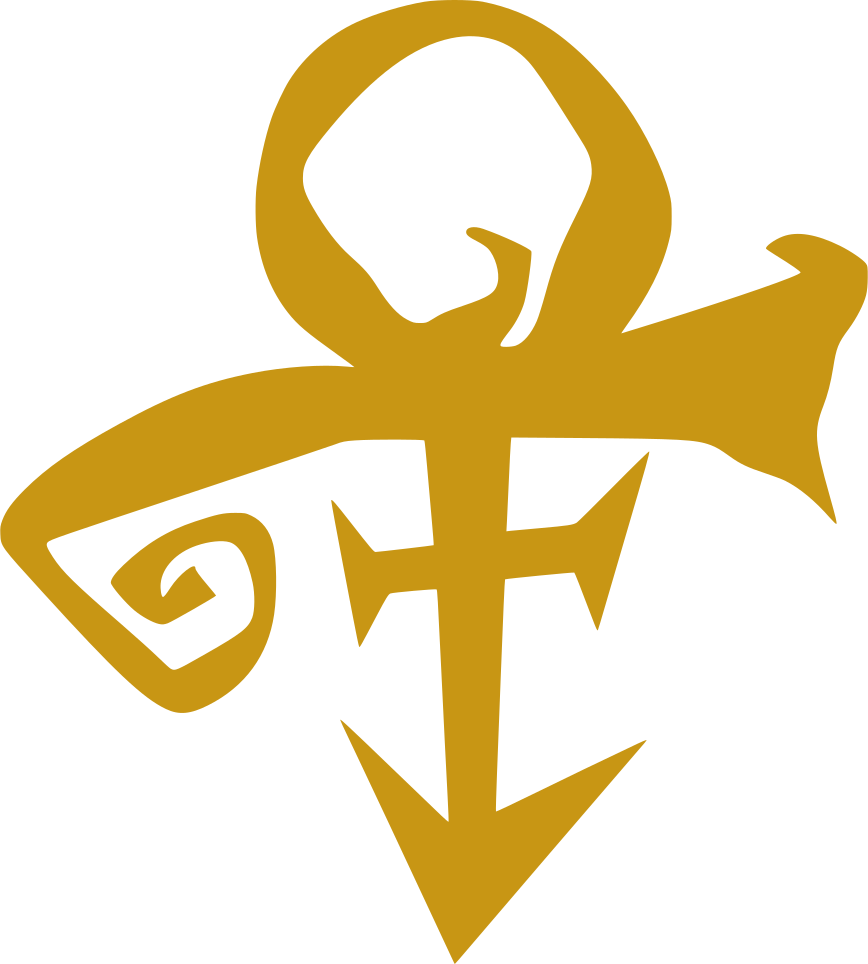
The symbol combines the male (♂) and female (♀) signs, with an additional horn element referencing his cloud guitar. It first appeared on the 1992 Love Symbol Album cover, then became his legal name in 1993. Warner Bros. had to mail floppy disks containing the symbol font to press outlets because it couldn't be typed on a keyboard.
:: The Battle
Prince signed with Warner Bros. in 1978 at 19 years old. The deal gave them ownership of his master recordings and, eventually, the trademark on his name itself. By 1992 the relationship had soured badly — Warner controlled how frequently he could release music, and he wanted to put out far more than they would allow. He had already been recording constantly; the vault at Paisley Park was filling up.
The name change was a legal and symbolic maneuver — if he was no longer legally "Prince," Warner's hold on that name became less useful as a leash. It didn't fully work. He still had to fulfill the contract. But it shifted the public narrative and made the label look exactly like what he was calling them.
Prince is the name that my mother gave me at birth. Warner Bros. took the name, trademarked it, and used it as the main marketing tool to promote all of the music that I wrote. The company owns the name Prince and all related music marketed under Prince. I became merely a pawn used to produce more money for Warner Bros.
— Public statement, 1993
SLAVE
written on his right cheek · 1994 onwards · every appearance · every performance
From 1994 he began writing SLAVE on his right cheek in every public appearance — music videos, television, award shows. Most visibly at the 1995 BRIT Awards, where he collected his award and said: "Prince. In concert: perfectly free. On record: slave." Then walked off.
:: The Timeline
1992
The Love Symbol Album
The symbol appears on the cover of his fourteenth album. It's his name in visual form before it becomes his legal name. The huge Warner deal signed this year promised six more albums and deepened the conflict over pace, control, and ownership.
1993
The Name Changes — June 7
On his 35th birthday he legally changes his name to the Love Symbol. Warner mails floppy disks with the symbol font to every press outlet in the country. The Artist Formerly Known As Prince is born — though he never calls himself that.
1994
SLAVE / Come
He begins writing SLAVE on his cheek for all appearances. Come is released — the last album issued as "Prince." The Black Album, recorded in 1987 and suppressed since, is finally released officially by Warner without his cooperation.
1995
BRIT Awards / The Gold Experience
SLAVE on his cheek at the BRITs. His acceptance speech is seven words. Warner sits on The Gold Experience for most of the year before finally releasing it in September — one of the most purely brilliant records of his career, delayed out of spite.
1996
Emancipation — Contract Ends
He fulfills his contract with Chaos & Disorder, released in July. Warner releases him in May 1996. In November he releases Emancipation — three hours of music on his own label, distributed through EMI. The title says everything.
2000
The Name Returns
In May 2000, after the Warner contract era had passed, he reclaims the name Prince. The symbol era officially ends. He never fully flattened the decision into one explanation, which feels right: the symbol had done its work.